Charcoal Hair Treatment:
The Detoxifying Smoothing Therapy Explained
Activated charcoal lifts build-up from hair and scalp while it softens texture — refinement rather than chemical restructuring.
Detox and Soften
Thick Hair, Transformed
Most smoothing services work on the hair. Charcoal relaxing works on the hair and the scalp at the same time, using activated charcoal to draw out the build-up that makes thick, dense hair feel heavy and behave badly. It is the gentlest option on our smoothing menu, and for coarse hair it is often the one that changes the most about day-to-day manageability.
Jump to a Section
What Is Charcoal Hair Treatment?
Charcoal relaxing is a smoothing therapy built around activated charcoal. It detoxifies hair and scalp while softening texture, and it does that without permanently altering your natural curl pattern.
That last point is what makes it different from everything else in the relaxing category. A traditional relaxer breaks and reforms the bonds in your hair permanently. Charcoal relaxing refines what is already there — it makes coarse hair behave like softer hair without rewriting what the hair is.
The short version: if your hair is thick, dense and heavy, and it feels like it fights you rather than falls, this is the treatment aimed squarely at that problem.
How Does Activated Charcoal Actually Work on Hair?
Activated charcoal is porous at a microscopic level, which gives it an enormous amount of surface area for its size. That surface binds to impurities — mineral deposits from hard water, silicone build-up from styling products, excess oil at the scalp — and lifts them away rather than dissolving them with detergent.
Build-up is a bigger factor in how hair behaves than most people realise. Coated hair is heavier, duller, and far more resistant to holding any style. Once it is genuinely clean at the cuticle, the same head of hair often feels a grade finer and moves considerably more freely.
The smoothing element works alongside that. With the build-up gone, the softening agents in the formula can reach the hair evenly, which is why the result is a uniform softening rather than the patchy finish you get when product sits on residue.
Charcoal Relaxing vs Traditional Chemical Relaxers
These get grouped together because of the word “relaxing”. They are not comparable services.
| Feature | Charcoal Relaxing | Traditional Chemical Relaxer |
|---|---|---|
| What it does | Detoxifies and softens texture | Permanently breaks and reforms bonds |
| Curl pattern | ✓ Retained, just softer | ✗ Permanently removed |
| Reversible | ✓ Yes — grows and washes out | ✗ No |
| Scalp benefit | ✓ Detoxifying | Can irritate |
| Grow-out | No demarcation line | Visible line at regrowth |
| Risk profile | Low | Higher — irreversible if wrong |
Why we prefer it: for most clients who ask for a relaxer, what they actually want is manageability, not the permanent removal of their texture. Charcoal delivers the first without committing them to the second.
Who Should Consider Charcoal Hair Treatment?
This is a treatment with a clear ideal candidate rather than a universal one.
Thick, Coarse or Very Dense Hair
The core profile. Dense hair carries more build-up and feels the weight of it more, so removing it makes the biggest proportional difference here.
- Noticeably lighter and more fluid
- Softer texture without losing the curl
- Cuts blow-dry time considerably
Anyone With Product or Mineral Build-Up
Hard water, dry shampoo and silicone-heavy styling products all accumulate. If your hair has slowly stopped responding to everything, build-up is usually why.
- Lifts silicone and mineral deposits
- Restores response to other treatments
- Hair holds style again
Clients Wanting Softer, Not Straighter
If you like your texture but not how heavy or unruly it is, this softens without erasing. Nothing about your curl pattern is permanently changed.
- Keeps your natural pattern
- No commitment to straight hair
- Grows out with no line
People With Scalp Congestion
Because the treatment addresses the scalp as well as the hair, it suits anyone whose roots feel oily or congested within a day of washing.
- Detoxifies at the scalp, not just the lengths
- Often extends time between washes
- Comfortable rather than stripping
What Happens During a Charcoal Treatment Appointment
Considerably shorter than a restructuring service, and far less demanding on the hair.
1. Hair and Scalp Assessment
Density, texture and scalp condition are checked, along with how much build-up is actually present.
2. Charcoal Cleanse
The activated charcoal formula is worked through hair and scalp, binding to impurities and lifting build-up away.
3. Processing
Left to draw out deposits. This is where most of the detoxifying work happens.
4. Softening Phase
With the cuticle genuinely clean, the softening agents can penetrate evenly along the strand.
5. Rinse and Condition
Thorough rinse followed by conditioning to rebalance moisture after the detox.
6. Blow-Dry and Finish
Dried and styled so you can feel the change in weight and movement before you leave.
In the Salon
Before & After
Thick, dense hair becomes lighter, softer and far more fluid — the texture is still yours, it simply stops fighting you.


Results shown are from services performed at Pierre Haddad Hair Management, Sydney CBD. Individual results vary with hair type, condition and aftercare.
Can Charcoal Treatment Be Paired With Other Services?
Yes, and it often should be. Because charcoal cleans rather than restructures, it works well as the preparation step before other treatments rather than competing with them.
Pairing it before a keratin treatment or nanoplasty means the smoothing formula meets a genuinely clean cuticle, which improves how evenly it takes. Pairing it with hair botox gives you detox plus deep protein repair in one visit.
Sequencing around colour needs more care. Because this is a detoxifying service, it is generally done before a colour appointment rather than immediately after one. Your stylist will plan the order so nothing you have paid for gets lifted back out.
Keeping It Going at Home
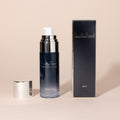
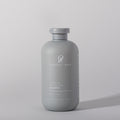
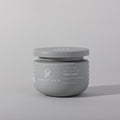
Results depend heavily on what happens between visits, and there is a matching home range built for exactly this. The Charcoal Revitalising Shampoo and Conditioner maintain the detox effect without stripping, and the Charcoal Revitalising Treatment is the weekly step that keeps coarse hair soft between salon appointments.
Beyond the products: avoid silicone-heavy styling creams, which rebuild exactly the coating the treatment just removed, and rinse with fresh water after swimming so chlorine and salt do not undo the work.
Pierre Haddad Hair
Our Treatment Menu
Charcoal Relaxing
Detoxifying therapy that lifts build-up while softening coarse, dense texture.
GentlestHair Botox
Protein and amino acid repair for brittle, over-processed hair.
Deep RepairNanoplasty
Nano-molecule smoothing that repairs as it straightens. Four to eight months.
Smooth + RepairProfessional Keratin
Frizz control and mirror shine with around three months of humidity resistance.
Most PopularJapanese Straightening
Permanent thermal reconditioning for very curly or resistant hair.
PermanentHair Rejuvenation
Intensive reconstruction when condition needs restoring before anything else.
Most IntensiveYour Questions
Charcoal Treatment, Answered
What is charcoal hair treatment?
Does charcoal treatment permanently straighten hair?
Who is charcoal hair treatment best suited to?
Does activated charcoal help detoxify the scalp?
Is charcoal treatment gentler than a traditional relaxer?
Can charcoal treatment be combined with keratin or hair botox?
Is charcoal treatment suitable for thin or fine hair?
How does charcoal treatment improve manageability?
Does Pierre Haddad sell charcoal haircare for home use?
How long do the results of a charcoal treatment last?
Will charcoal treatment strip my colour?
Related Reading
Hair Botox Treatment Explained
The deep-repair option that pairs naturally with a charcoal detox.
What Is Nanoplasty Hair Treatment?
Where to go next if you want smoothing as well as softening.
Should I Use Sulphate-Free Shampoo?
How your shampoo choice affects build-up and treatment longevity.
How to Repair Damaged Hair
What to prioritise if condition, not build-up, is the real problem.